
How to guess the year and location of a photo
A useful guess starts with evidence you can point to. Separate what the photograph shows from what you think it means, then look for several clues that agree. Try that approach with these two photographs from YearLens.
Start wide, then inspect the details
First describe the scene without naming a country or decade. Is this a street, a waterfront or a public gathering? Look at the landscape and buildings, then inspect signs, vehicles, clothes and objects people carry. Read a word before guessing its language; look at several vehicles before dating the whole street.
Keep two working answers: a range of years and a region. A readable date may narrow the first; a place name or distinctive landmark may narrow the second. If neither appears, stay broad until another clue supports your idea. The playing guide covers the map, year slider and scoring.
Photo 1: a newsstand beneath a staircase
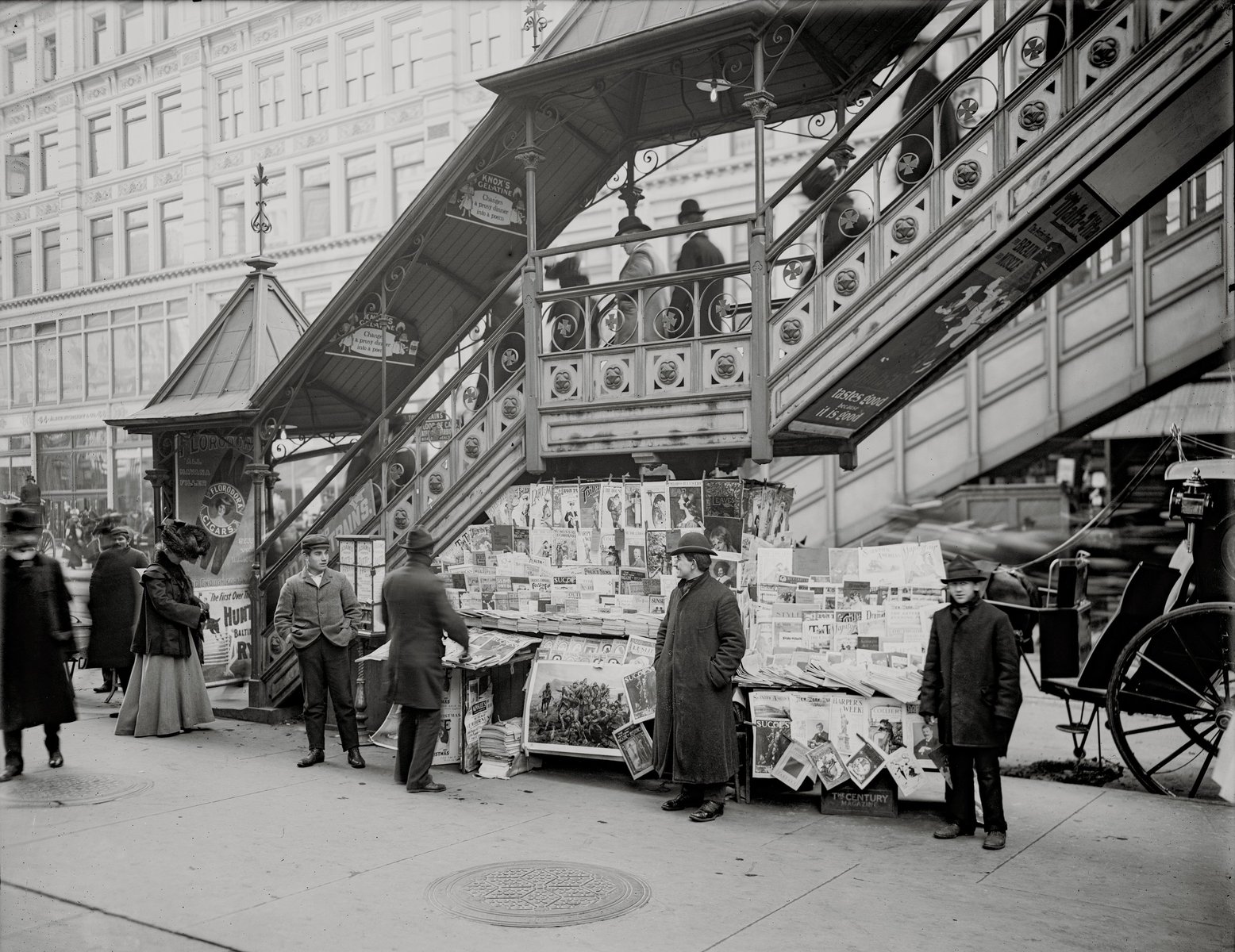

What you can see: magazines and newspapers cover the stand. English words appear on publications and advertisements. People wear coats and hats, and a large metal staircase crosses the frame. These are observations; none alone identifies an exact year or city.
What you might infer: compare the clothing and printed material before choosing a period. The English text suggests a language context, rather than proving the country. If you recognise the staircase as part of an elevated railway, treat that as a location hypothesis to check against the rest of the street.
Reveal the year and location for photo 1
YearLens reference: 1903 · 23rd Street and Sixth Avenue, Manhattan, New York City, USA.
The archive description places the scene around the turn of 1902–1903, noting December and January publications. That uncertainty matters: an issue date helps establish a range, but does not prove the day a photograph was taken.
Photo 2: an old arch on a busy street
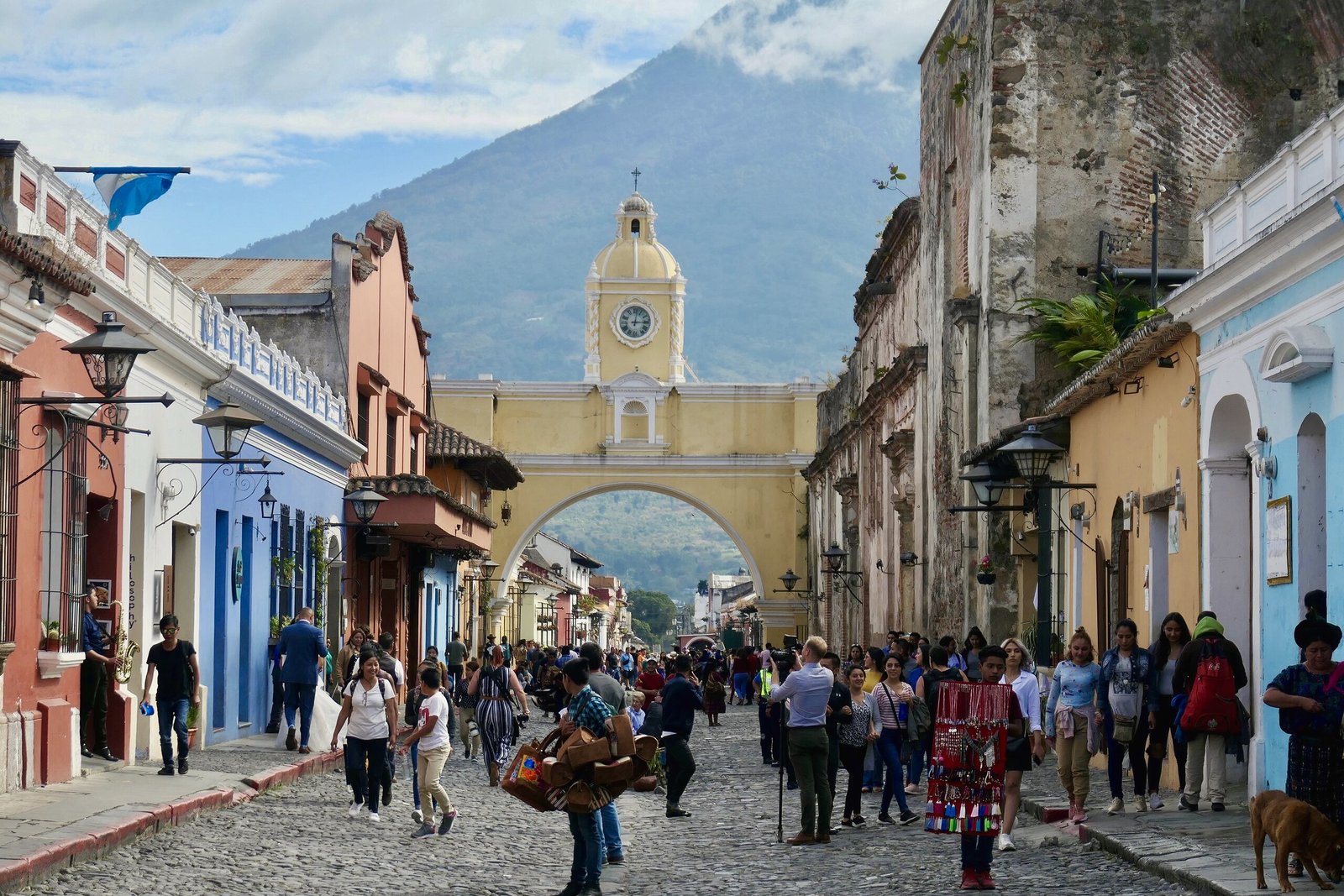
What you can see: a yellow arch with a clock spans a cobbled street. Low, colourful buildings line both sides, a mountain fills the background, and pedestrians wear contemporary casual clothing. Look at the people as carefully as the architecture.
What you might infer: the arch and mountain together are more useful for locating this scene than a general impression of colourful buildings. The old masonry does not date the photograph. Clothing supports a recent period, but cannot distinguish one nearby year from another with confidence.
Reveal the year and location for photo 2
2020 · Santa Catalina Arch, Antigua Guatemala, Guatemala.
YearLens identifies the landmark in its photo record. The photograph’s Commons record credits Bruno Rijsman and dates it to February 2020. A recognisable landmark can settle the location while the exact year still needs the source.

Three habits that prevent avoidable mistakes
- Separate the age of an object from the age of the image. A preserved car, traditional outfit or centuries-old building can appear in a recent photograph.
- Use colour cautiously. Black and white can be an artistic choice; colour can be added later. Check the scene’s contents before trusting its finish.
- Keep location confidence separate from year confidence. Knowing a landmark does not make its date obvious. A strong year clue also does not locate every street in a country.
Practise, then read the reveal
Choose a single-player challenge or open game settings for an untimed game. Before submitting, name your strongest clue and one reason you could be wrong. Afterward, compare your reasoning with the description and photo credits, rather than remembering only the score.
Return for the daily challenge to practise the same method on another set. If you are comparing games, the YearLens and TimeGuessr overview explains how the two independent services differ.